⚠️ The Desiccant Dryer Maintenance Problem Nobody Wants to Talk About
Everybody wants to talk about advanced compressed air technology. Heated blower purge dryers.
- Purge-saving controls
- Dewpoint demand strategies
- New dryer designs
- Premium filtration
- Smart monitoring
All of those things have their place.
But before we get too deep into the advanced controls and premium features, there is a basic maintenance item that deserves more attention.
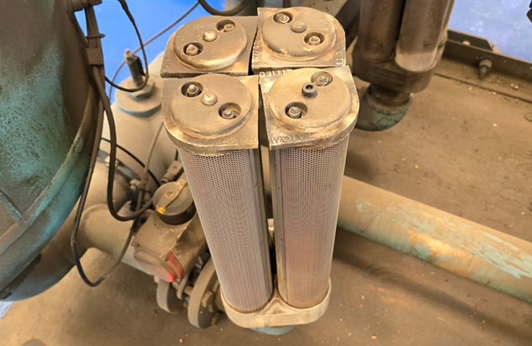
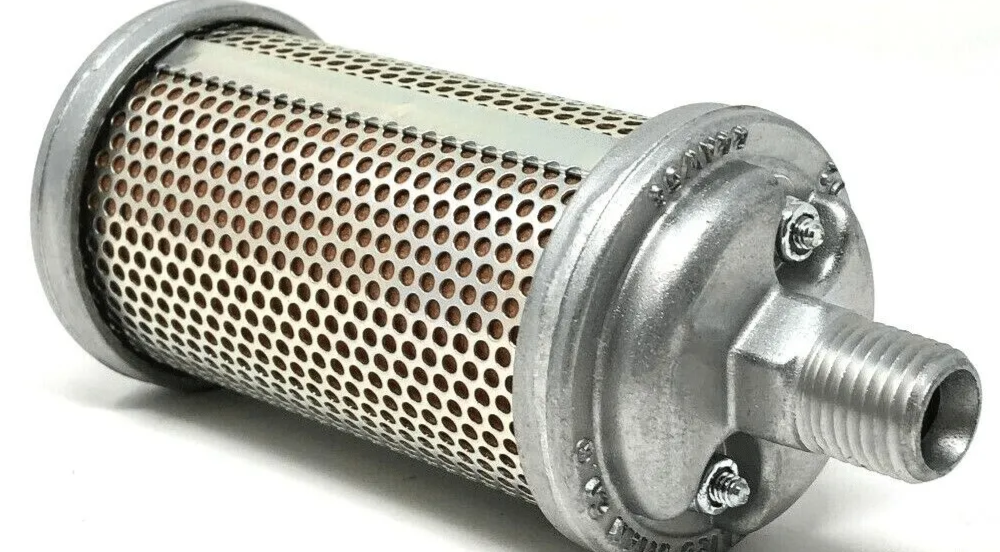
Desiccant dryer mufflers
Yes, mufflers. Not the most exciting topic in the compressed air world, but one that can quietly affect dryer performance, air quality, reliability, and energy cost.
Why Mufflers Matter on Desiccant Dryers
A regenerative desiccant dryer typically has two towers. One tower dries the compressed air while the other tower regenerates. During regeneration, purge air flows through the offline tower and removes moisture from the desiccant bed. For that process to work properly, the purge air needs a clear path to exhaust.
That is where the muffler comes in.
The muffler reduces exhaust noise when the dryer purges. But it also sits directly in the exhaust path. When that muffler becomes restricted, backpressure increases.
And when backpressure increases, the regenerating tower may not fully depressurize.
- The dryer may still cycle
- The valves may still shift
- The control panel may look normal
- The plant may still have air
But the dryer may not be regenerating the desiccant bed properly. That is where the problems begin.
🔗 The Chain Reaction
Here is the natural chain of events when purge mufflers are ignored or the mufflers do not get serviced.
- Desiccant dust, oil residue, moisture, and contaminants build up inside the muffler
- Backpressure increases
- The offline tower does not depressurize the way it should
- Purge air loses effectiveness
- The desiccant bed does not regenerate properly
- Dewpoint performance suffers
- Someone increases purge pressure or system pressure to compensate
- Energy costs go up
Then, eventually, somebody shows up with a drill and starts drilling holes in the side of the muffler to relieve the pressure. This creates unintended consequences: noise levels go up, pollution is released.
That is not a repair, but a bush fix and a symptom of skipped maintenance.
Why Increasing Purge Pressure Is Not the Answer
When a dryer is not performing, it can be tempting to increase purge pressure or raise compressor discharge pressure. But that often means the plant is using more compressed air and more energy to workaround a restriction.
Heatless desiccant dryers can already consume a significant amount of compressed air for purge. If purge demand increases because the exhaust path is restricted, the cost can add up quickly.
This is one of the many reasons compressed air systems become expensive.
The plant is not always paying for useful work.
Sometimes it is paying for leaks, pressure drop, artificial demand, poor controls, and maintenance problems that have gone unresolved.
A clogged muffler is one of those problems.